Sunday, April 21, 2013


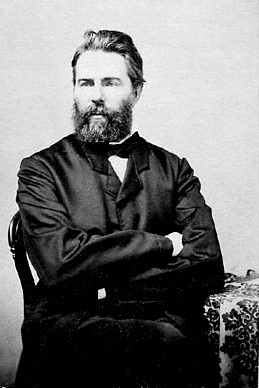
By Hartsook Photo [Public domain], via Wikimedia Commons
 
 
DeLillo, Death, and Revision
 
The writing process for this essay has been just that, a process. I have rearranged and revised my essay countless times and yet it still doesn't seem right.  I don’t know if I just fight the essay and the process to much or if my OCD just keeps getting in the way.  I have learned with this essay that I do need to follow an outline more because of the way DeLillo writes.  He actually puts a lot of information in his story so in order to make my essay clear and have learned how to write a clear and concise outline.  


Sunday, April 7, 2013

Death & DeLillo


By César Astudillo from Collado Villalba, Spain (Suddenly, a black rose) [CC-BY-2.0 (http://creativecommons.org/licenses/by/2.0)], via Wikimedia Commons
Death, the Final Frontier

Death is a subject that most people want to avoid even thinking about.   Most people don’t want to acknowledge that they are mortal, so even if it is brought up in a group the subject is usually changed very quickly.  In Don DeLillo’s “White Noise” the subject of death is brought to the reader’s attention by the main character, Jack when he asks “Who will die first?” (DeLillo, 15)  He is referring to the conversations him and his wife, Babette, have on a regular basis.  While the fear of death is natural, the message that comes out of the book is not that death is terrifying; it is the unknown that holds the true fear.  The unknown of when it will happen, what happens to the decedent’s soul or the unknown of what happens to the loved ones still living.  In DeLillo’s book, he explores these feelings and thoughts through his characters in a way that if could apply to anybody who has taken the time to contemplate the end of life.

Saturday, March 23, 2013

White Noise Response

Roger A Smith [CC-BY-SA-2.0 (http://creativecommons.org/licenses/by-sa/2.0)], via Wikimedia Commons
            While the book “White Noise”, by Don Delillo was a very difficult I feel like I may have come away with a few different themes or viewpoints that the author was trying to convey.  The family in the book seemed like the typical modern family, with two divorced parents marrying and sharing of children, yet there seems to be a dark cloud hanging over this family.  I am leaning towards the theme that the toxic spill and infidelity was the authors’ way of expressing the dangers and our own personal fears of what the future may hold for us. 

                This is just a tentative theme that I am working on while I reread portions of the book to see if I can get a different point of view that I may have overlooked the first time.  In the mean time any and all feedback is greatly appreciated.

Sunday, March 10, 2013

Dear Ms. Cline


March 10, 2013

 Ms. Cline:

 Wow!! Can’t believe that we are already half way through the semester, where does the time go.  I have to say that I have really enjoyed the way you direct the class.  You have taught me a new way of expressing my understanding of different literature.  Even though I was having a tough time with the Swift essay, I was able to get past the shock of his proposal and see what he was really trying to say.  You are helping me to broaden my mind and to reach out from the everyday mundane thinking that we all can get caught up in.   I have even branched out and let other read what I have written, which is a first for me.

I am looking forward to the rest of the semester and to your guidance in learning on how to analyze different readings.  Hope you have some fun on spring break.

Sincerely,
Michelle Ferguson

Sunday, February 24, 2013

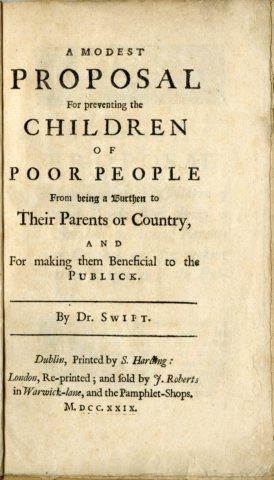
The Swiftian Satire


By Jonathan Swift [Public domain], via Wikimedia Commons
 The Swiftian Satire
          While reading “A Modest Proposal” by Jonathon Swift, the message that he was trying to bring about was quite clear, the living conditions of the poor needs to be changed.  He uses both Horace and Juvenal methods to bring this issue into the light, in hopes that someone would see how grotesque the situation is. 
          His suggestion of mother’s selling their babies to the rich for food, along with the suggestion that the babies skins could be used for fashionable wear is quite extreme and I feel that he used that suggestion in his satire to let the public know that the needs of the poor are just as extreme.  Yet, he does it in a humorous and illogical way so as not to offend society’s elite. 
          In the end, he does take a more serious tone to ask his readers for compassion and charity to those less fortunate.  At first, I thought that this was a very dark satire then as I read on I came to believe that is was actually an ingenious way to get attention towards what he sees as a growing problem.
To read the above satire click on the link below:

Sunday, February 17, 2013

Rhetorical Analysis


I picked the commerical for the Humane Society of America due to the emotional (Pathos) appeal directed at the audience they chose to reach.  Being an animal lover this commercial plays on the need to do something for animals that are being mistreated, abused, and neglected.  The down side to this commercial is the logic (Logos) of letting me believe that my $19 alone will help save countless of animals lives.  I think the argument for the fund raising would be more effective if they put a little more focus on the fact that if you donate you would be a part of a community or group effort to help save the animals and that together as a group, so much more could be done.

Sunday, February 10, 2013

Bartleby Essay

This week I have been working on my essay "Bartleby, Fact or Fiction."  I decided to go with Thesis Statement #2, which states that the character Bartleby is actually an imaginary character in the narrator's mind.  I was able to expand on this with many different points on how people use different ways to deal with inner turmoil and how people justify what they don't understand and what they don't want to face in their lives.  I even played with the idea that maybe it wasn't Bartleby that was lock up in the end but the narrator himself to help him deal with what Bartleby represents.  While this essay has been challenging, it has also been fun at the same time.

Sunday, February 3, 2013

Close Reading of Bartleby.


"Like a very ghost, agreeably to the laws of magical invocation, at the third summons, he appeared at the entrace of his hermitage."  This is the passage that stuck with me the most, mostly due to my past experience at working with people who have dementia, alzhiemers, and other mental defects that come from being elderly.  The narrator states that he is in fact elderly so that led me to think that Bartleby may have been in his imagination due to one of those illnesses which causes individuals to confuse past, present, and future.  He thinks of himself as a good person with compassion for others but as the story went he started questioning who he really is.  I found this story a little difficult to read at times just because of the language barrier yet, I still could see what the deeper meaning may be.

To learn more about the author Herman Manville, just click on the link.

In answering the question why we double space in essays, I was told once the reason is not only where the writer can make changes  but also it is easier on the eyes to read and the reader can also make their notes in the spaces so that they have a better understanding.

Saturday, January 26, 2013

Summary vs. Analysis


By Silviac (Own work) [CC-BY-SA-3.0 (http://creativecommons.org/licenses/by-sa/3.0)], via Wikimedia Commons

Summary vs. Analysis

            After watching a lecture about Summary vs. Analysis from my English Professor, the difference between the two is quite clear.  Summary is basically a book report, telling the reader what the story is about.  Analysis is telling the reader what you learned from the story and your point of view on what the author was trying to convey. 
            In a summary all one is doing is answering the question of what the book is about. Similar to reading the back cover of the book, all you are doing is getting an outline of the story.  There is no emotion or individual thought, no conclusions as to what the author is trying to express.  One wouldn’t normally put their pin on how the book affected them.  It is basically a black and white in context.

            With analysis it is much deeper than that, one can get into the question “What does this book signify to me?”  “What do I see in this book other than just the storyline?”  With analysis people can bring new colorful light to the book based on their own life experiences, which for each reader is different.

            An example would be from one of my favorite books by Jean Auel, “Clan of the Cave Bear.”  A summary of the book would be about an orphaned girl considered to be early modern man,  being raised by a clan of ancient men and women and how she tried to adjust.  An analysis of the book is how modern man treated ancient man in the year 10,000 B.C and I could go on to analyze how modern man has tried to dominate the world ever since.

            While summaries can be useful, I think I prefer analysis because it opens the mind to new ideas and thoughts.  Click on the link for more information on writing an analysis paper:

Saturday, January 19, 2013

Nabokov’s “Good Readers and Good Writers”

By Ben Ostrowsky [CC-BY-2.0 (http://creativecommons.org/licenses/by/2.0)], via Wikimedia Commons
 

Nabokov defines a good reader as someone who not only reads a book once but also rereads the book to get a better appreciation of the artistic value that the book has to offer.  Nobokov also believes that a good reader should possess imagination, memory, a dictionary, and some artistic sense.
I agree with Nobokov’s definition of a good reader.  Being an avid reader myself, I use my imagination to visualize what the authors describe in the stories that they write and as I reread the material the picture becomes clearer in my mind.  Plus I always make sure I keep a dictionary handy for the words I am not sure about like “bourgeoisie” which I just learned means middle class.  I believe I am a good reader because I use the skills that Nobokov describes plus one characteristic that was implied but not mentioned, a reader should have an open mind, especially when reading new authors.
To see the full essay, click on the link below: